Thursday, May 7, 2015

The 80/20 Principle


Conflict.  It is something most of us dread and will do almost anything to get out of.  Living overseas I daily interact with people from multiple cultures, personalities, and backgrounds.  Cultural misunderstandings are unavoidable. Miscommunication is common and can lead to unintentional offenses.  Additionally, we are all sinful human beings who naturally look out for our own interests above the needs of others.  Long story short, I will offend people and be offended.  I will hurt people, even when I do not mean to. Other people will inadvertently hurt me.  The question is how do I respond when I am hurt or hurt other people?

I have found the 80/20 Principle to be a great tool in dealing with conflict.  This principle states that in any conflict or disagreement, each party is responsible for part of the misunderstanding.  Even if I am not the person who started the conflict, I am responsible for my response and actions to the conflict.  They could be 80% of the problem, but I need to own my 20%. It means I need to pause, acknowledge how my actions have contributed to the issue (no matter how minor). The 80/20 Principle reminds me that I have to acknowledge my behavior and ask for forgiveness.  It is amazing how the simple act of apologizing and owning our behavior will defuse a tense situation.  The Principle helps me realize that I am never completely justified in my anger and that there is always a different side to the story.

This week I had the opportunity to live out the 80/20 Principle at work.  There was a disagreement about an action step that came out of a meeting.  Instead of justifying or defending our actions, my coworker and I were able to acknowledge our mistakes and apologize for actions that were hastily made.  Because we each quickly apologized for how our actions effected the other person, we were able to move on and resolve the issue in a relatively timely matter. We chose to talk about the problem in real time, not wait for other offenses to be added to this one incident.  Something that had the potential to fester for weeks was resolved in 20 minutes.  Relationship was strengthened because both parties took responsibility for actions.  Since the focus of the conservation was not each person attempting to get the other to admit guilt, we were able to move forward and discuss ways to avoid this problem in the future.  Instead of damaging relationship, application of this principle strengthen our working relationship and friendship.  

While I do not like conflict, I love that this principle is a tool to help me deal with conflict in a healthy manner.  It reminds me that I make mistakes, am sinful and need to repent of the things that I do wrong.  I helps me enter each conversation with a teachable spirit, listening for the other person’s heart and intention instead of focusing on getting them to apologize. It does not allow me to play victim or lay the blame solely on the other person.  It reminds me that conflict is another facet of health relationship and that when I take responsibility for my actions I show honor and respect to the other person.


Wednesday, May 6, 2015

上海探险 (Adventures in Shanghai)

The Bund, Shanghai's economic hub during the British colonization.  This is the Bank of China building, the first Chinese owned bank building on the Bund.


The first hotel in Shanghai to have an elevator. The "place to stay" in the early 1900s.
Across from downtown Shanghai.


The Oriental Pearl Tower at night.

Shanghai skyline at night.  The Bund is across the river.

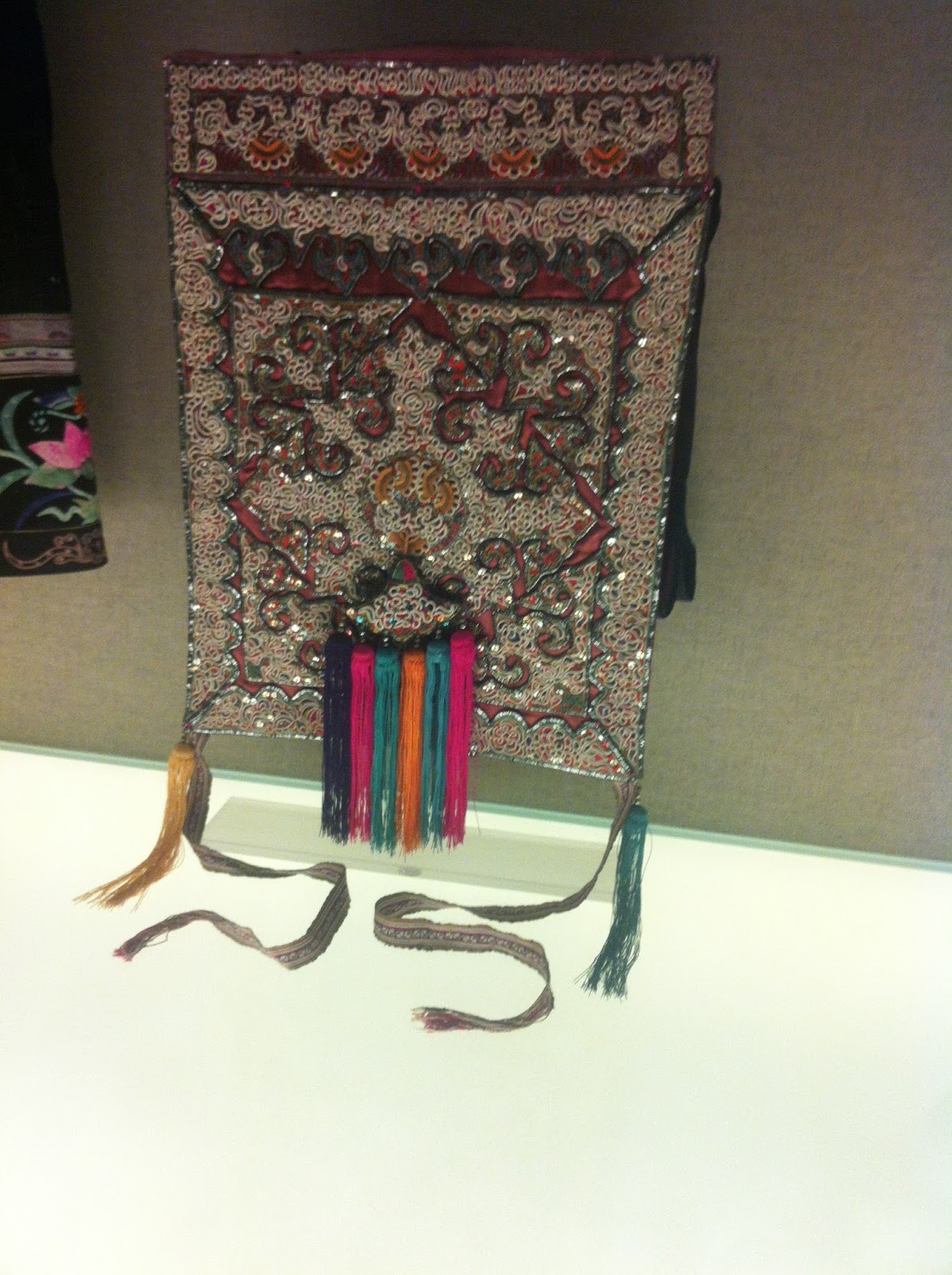
This is a baby-holder intricately hand-stitched by the Dong minority tribe in Southern China (in the Shanghai Museum).

The 1st currency in China. It was literally a coin in the shape of a shovel.  I believe these coins are from 300AD.

One of the stunning calligraphy scrolls I saw at the Shanghai Museum.

The Shanghai museum has pottery form 900BC.  I was so captivated by the intricate pottery work, this is the only piece I took a picture of.

At the Propaganda Poster Museum--me and Mao.

The Propaganda Museum had hundreds of original Mao busts from the Cultural Revolution.

Real dazhibao or "big character report" used to denounce a person during the Cultural Revolution.  The large, black characters over the smaller characters were written by the denounced person to defend themselves.

Needlepoint poster.

Sunday morning in the park is matchmaking time. Parents congregate in the park to find a spouse for the child.

Parents looking at ads trying to find a match for their child.


Tuesday, April 28, 2015

Celebration and Honor


This year I have had the privilege of attending the birthday parties of two local friends.  It is an honor for me to have them in my life, to call them my friend and be invited to help them celebrate this big day.  So I was stunned to find out that for both friends, this was their first ever official birthday party.  Both of these women come from the countryside where it is not common to celebrate birthdays.  Both women received gifts from family members and ate their favorite meal on their birthday, but there was no party like we think of in the West. 

I love living here and love all the things I learn in a different culture.  I think Chinese culture is very good at honoring the past, of communally celebrating Chinese history and culture.  There are multiple cultural festivals and holidays through the year and China is very good at celebrating the holidays.  For most people, it is not just a long weekend but a day to remember the past and connect with family.  Chinese culture is very good at creating community and corporate unity (two qualities I think are lacking in many Western cultures).  On the opposite side of the spectrum, Western cultures (particularly America) is very good at celebrating the individual.  Singular achievements are celebrated and acknowledged, which is good and healthy in appropriate doses.  The longer I live overseas the more I feel convinced that we need to find a health balance between celebrating individuals and acknowledging the importance of connection and community.

It was surprising to me to hear that two dear friends have never had a birthday party like I had growing up.  I made it my mission to throw them the birthday party of their dreams.  When I ask each person what they wanted to do they replied, “What can I do for my birthday?”  I responded that they can do whatever they want.  It is their special day and their party should reflect their personality and interests.  It took multiple conversations to get them to fully embrace the idea that they were in complete control over the celebrations agenda and the people attending really, truly did not care what they chose.  It took a while for me to realize the culture clash.  They were coming from a perspective of putting their friend’s needs above their own.  When I framed it from the perspective that in American culture a way we show respect is by honoring each person’s individuality and unique interests, the women were more comfortable with the idea.  I was able to help them realize that my only goal for celebrating their birthday was to make them feel special, loved, and honored.  Whatever we did and whatever we ate where not important.  

In the end I attended two birthday parties that were a real reflection of each woman.  During the parties I heard multiple times from each woman that they felt so honored to have people celebrate their birthday.  Both of my friends said that their parties were a day they will never forget.  Felicity said that she almost cried multiple times from happiness.  As I reflect on their words, I do not think it was the birthday party itself that struck such a deep chord.  It was the celebration of them as an individual, the honoring of their unique wiring and created design that resonated with each woman’s heart.  The birthday party was a vehicle to honor each woman.  In a culture that is all about community, seeing into the heart of the individual was the most important thing.

I am blown away that something that is so natural for me was able to so deeply impact my friends.  It also served as reminder that no matter what I do, I want to communicate honor and respect to each person I encounter.  While this is not an everyday example of honoring someone, it is a good reminder that each of my actions should reflect this desire.

Friday, April 17, 2015

Actions Speak


Today was an adventurous day.  I ended up in a small town hospital helping my Pakistani friend receive a tetanus shot.  As we were waiting for the doctor my friend turned to me and asked:
        “Jennifer, are all American’s as nice as you?”  

I was momentarily left speechless.  I was flattered that she considers me a nice person.  It is always nice to hear compliments.  Above all, it was also a great reminder that actions speak. We were having this conversation in the ER waiting room.  I was putting actions behind my words of friendship and encouragement.  When there was a problem, I was there to help.

This adventure once again highlighted the importance of my actions.  Living and working in a different culture, my actions are being observed by everyone around me.  I might not be able to easily converse with everyone I meet, but they are able to see my attitude, hear if I am complaining under my breath or am not being patient.  My actions are a loud witness to my character.  I want my character to reflect Him at all times.  I desire my actions to prompt this questions from everyone I meet.